
Every few months, someone sends a viral post claiming wireless charging is secretly destroying your battery. It gets shared thousands of times, and suddenly everyone is going back to cables.
Here's the truth: wireless charging is not bad for your phone — but there are specific scenarios where it can cause real problems, and understanding the difference matters if you charge your phone wirelessly every day.
This is the honest, science-backed answer. No fear-mongering, no oversimplification.
Quick answer:
Is wireless charging bad for your phone?
No — wireless charging from a certified charger is not bad for your phone or your battery. Modern Qi2 and Qi2.2 wireless chargers include thermal management, overcharge protection, and voltage regulation specifically designed to keep your battery healthy during wireless charging.
The nuance: cheap, uncertified wireless chargers can cause real battery damage over time through poor heat management. The charger quality matters far more than whether charging is wired or wireless.
What actually damages a phone battery?
Before answering whether wireless charging is harmful, it helps to understand what actually degrades a lithium-ion battery over time. There are three main culprits:
Heat.
Sustained high temperatures are the primary enemy of lithium-ion battery chemistry. Heat accelerates the chemical reactions inside the battery that cause capacity loss. This is why leaving your phone on a hot car seat or in direct sunlight degrades the battery faster than almost anything else you can do.
Overcharging.
Keeping a battery at 100% charge for extended periods causes a type of stress called "high state of charge stress" — it accelerates the electrode degradation that reduces maximum capacity over time.
Deep discharge cycles.
Regularly running your battery from full to 0% causes more wear than shorter, shallower charge cycles.
Notice that "wireless charging" isn't inherently on this list. Whether charging is wired or wireless doesn't matter — what matters is the heat generated, how charging is regulated at 100%, and how charging cycles are managed. A properly engineered wireless charger handles all three correctly.
Does wireless charging generate more heat than wired charging?
Yes — slightly. This is the legitimate technical concern behind the "wireless charging is bad" narrative, and it's worth understanding accurately.
Wireless charging via electromagnetic induction is approximately 80–85% efficient. The remaining 15–20% of energy that doesn't make it into your battery is released as heat — in both the charging coil and your phone's receiver coil.
Wired charging is approximately 90%+ efficient, generating less heat for the same amount of energy delivered.
In real-world terms, this means your phone will typically run 1–3°C warmer on a wireless charger than on a wired charger at the same wattage.
That difference is real but modest under normal conditions.
The key phrase is "under normal conditions." Several factors can push wireless charging heat significantly higher:
- Using an underpowered adapter that forces the charger to work harder
- Phone misalignment on non-Qi2 chargers causing energy waste as heat
- Charging in a hot environment or in direct sunlight
- Running intensive apps while wirelessly charging
- Using an uncertified charger with no thermal management
Qi2 and Qi2.2's improved coil alignment reduces energy waste significantly compared to standard Qi, which is one of the reasons these newer standards run cooler despite delivering more power.

Does wireless charging reduce battery life?
The research on this is more nuanced than most tech articles acknowledge.
The concern is real but overstated.
Studies on lithium-ion battery degradation consistently identify temperature as the primary driver of capacity loss.
Since wireless charging generates slightly more heat than wired, extended daily wireless charging can theoretically accelerate battery wear marginally compared to wired charging in identical conditions.
The practical impact is minimal with a good charger.
Research cited by battery researchers found that battery health differences after six months of wireless versus wired charging were within 2–3% — measurable but not significant for everyday users.
The overcharge protection matters more than the charging method.
Modern smartphones — and modern certified wireless chargers — manage the 100% threshold carefully.
Once your battery reaches full, the charger drops to trickle power, delivering just enough to maintain charge without stressing the battery.
This behavior is identical whether you're charging wirelessly or via cable.
The real risk is uncertified chargers.
A cheap wireless charger without proper thermal management and overcharge protection causes far more damage than the wired-versus-wireless distinction ever could.
An uncertified charger that runs hot all night is the scenario that actually degrades battery health — not wireless charging itself.
Does MagSafe damage your iPhone battery?
This is one of the most searched questions in the wireless charging space — and the answer is the same: no, MagSafe does not damage your iPhone battery when used correctly.
MagSafe is Apple's implementation of magnetic wireless charging, delivering up to 25W on iPhone 16 and up to 15W on iPhone 12–15.
Like all Qi2-compatible wireless charging, it generates slightly more heat than wired charging — but Apple's thermal management on iPhone is specifically designed to handle this.
iPhone has a built-in temperature sensor that monitors battery temperature during charging. If the phone gets too warm, it automatically reduces charging speed — you may have noticed your phone sometimes shows "Charging On Hold" in hot conditions.
This is the safety system working correctly, not a sign that MagSafe is harming your battery.
The one legitimate MagSafe concern raised by some researchers: the proximity of the magnets to the battery over years of daily use.
Apple's engineering accounts for this — the magnet array is positioned to minimize interference with battery chemistry — but it's worth knowing this discussion exists in the technical community.
Does MagSafe charger damage battery?
No more than any Qi2 wireless charger used with proper certification and thermal management.
Is wireless charging safe? What about radiation?
Yes, wireless charging is safe.
The electromagnetic field used in inductive wireless charging operates at very low power levels and very short range — centimeters, not meters — and is non-ionizing radiation, the same category as WiFi and Bluetooth signals.
Non-ionizing radiation does not have enough energy to break chemical bonds or damage cells.
This is categorically different from ionizing radiation (X-rays, gamma rays) which does pose health risks.
Regulatory bodies including the FCC and CE have established safety standards for wireless charging products, and certified chargers operate well within those limits.
The magnetic field from a wireless charger also does not affect other electronics nearby in normal use — though it can affect credit cards and hotel keycards placed directly on the charging surface, which is why most wireless chargers include foreign object detection that stops charging if it detects a card between the phone and the pad.
Why is my phone overheating when charging?
If your phone gets uncomfortably hot while charging wirelessly — not just warm, but hot — it's almost always one of these causes:
Cheap uncertified charger.
No thermal management, no power regulation, and no ability to reduce output when temperatures climb.
This is the most common cause of excessive wireless charging heat and the most dangerous for long-term battery health.
The fix: replace it with a CE, FCC, ETL, and TÜV certified charger.
Underpowered adapter.
When your wall adapter can't supply the wattage your wireless charger needs, the charger draws power inefficiently — generating excess heat in the process.
Match your adapter to your charger's requirements: 20W+ for Qi2, 30W+ for Qi2.2.
Phone misalignment on non-Qi2 charger.
On chargers without Qi2 magnetic alignment, a misaligned phone forces the coils to work harder to maintain the connection — wasting energy as heat.
Qi2's magnetic snap eliminates this problem.
Running intensive apps while charging. The combination of wireless charging heat plus processor heat from gaming or video can push temperatures higher than either would alone.
If your phone runs hot while charging and gaming simultaneously, it's the combination causing the problem — not wireless charging alone.
Hot environment.
Charging in direct sunlight, on a heated car seat, or in a very warm room removes your phone's ability to dissipate heat naturally. Wireless charge in a cool, shaded location if heat is a recurring issue.

The one thing wireless charging protects that wired charging doesn't
Here's the argument for wireless charging that almost nobody makes: it's better for your charging port than plugging in a cable every day.
Your USB-C charging port is a physical connector with metal contacts that wear down with repeated insertion and removal. Smartphone repair data consistently shows port damage as one of the top hardware failure points — and it makes sense. If you charge your phone once a day, that's 365 plug-and-unplug cycles per year, every year. The connector is rated for a certain number of cycles, and everyday use works through those cycles steadily.
Wireless charging eliminates all of that mechanical wear. Your port stays clean, the contacts stay intact, and the connector lasts longer. For people who charge multiple times per day, this is a genuine long-term benefit of switching to wireless.
How to wireless charge safely and protect your battery
If you're wireless charging daily, here's how to do it in a way that genuinely protects your battery long-term:
Use a certified charger.
CE, FCC, ETL, and TÜV certifications are independently tested confirmations that the charger manages heat, voltage, and overcharge correctly. Don't skip this — it's the single most important factor in wireless charging safety.
Match your adapter to the charger's requirements.
Underpowered adapters cause both slow charging and excess heat. Use 20W+ for Qi2 and 30W+ for Qi2.2.
Use Qi2 or Qi2.2 magnetic alignment.
Better coil alignment means less energy wasted as heat. Qi2's magnetic snap keeps your phone in the optimal charging position automatically.
Don't charge in hot conditions.
If your phone already runs warm — summer heat, direct sunlight, running intensive apps — give it a break before putting it on a wireless charger, or switch to a short wired charge instead.
Don't cover your phone while wireless charging.
A pillow, blanket, or case that traps heat while charging is more damaging than the charging method itself.
Charge between 20% and 80% when possible.
This applies to both wired and wireless charging. Shallower charge cycles cause less battery stress than full 0–100% cycles.
Most people don't optimize for this in daily life, and that's fine — but it's worth knowing if you want to maximize long-term battery health.
Are wireless phone chargers safe for overnight charging?
Yes — with a certified charger.
When your battery reaches 100%, a properly engineered Qi2 or Qi2.2 charger drops to trickle power, maintaining charge without continuing to push energy into a full battery. Your phone also manages this at the software level, with features like Apple's Optimized Battery Charging learning your overnight habits and timing the final charge to just before you typically wake up.
The scenario to avoid: an uncertified charger that doesn't have proper trickle management, left running overnight.
That's the combination that causes real battery stress — not certified overnight wireless charging.

The verdict: is wireless charging bad for your phone?
No — with the right charger.
Wireless charging from a certified Qi2 or Qi2.2 charger is safe, does not meaningfully damage your battery beyond normal aging, and in some ways is better for your phone than wired charging because it eliminates daily port wear.
The risks are real but they're about charger quality, not wireless charging as a technology:
- Cheap uncertified chargers with poor thermal management — bad for battery health
- Misaligned charging on old Qi pads without magnetic alignment — causes excess heat
- Charging in hot conditions without proper airflow — avoidable with awareness
The fix for all of these is a properly certified Qi2 or Qi2.2 charger used with the right adapter.
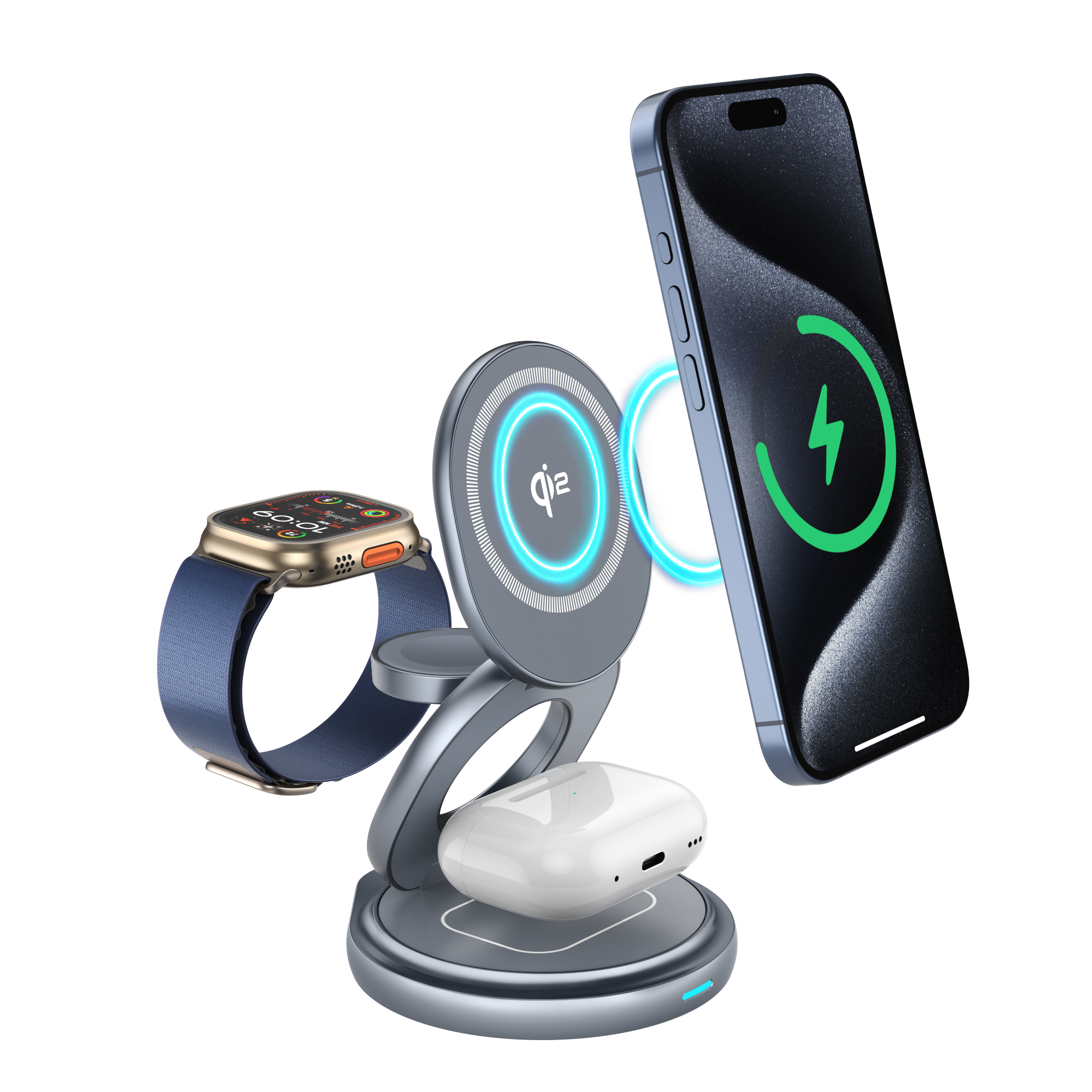
The Urban Geek's FlexOrb Qi2.2 Swivel is CE, FCC, ETL, and TÜV certified — independently tested, not self-declared — with built-in smart temperature control, overcharge protection, and foreign object detection. 25W Qi2.2 charging for iPhone, 7W Apple Watch, 3.2W AirPods, from $68.99.
→ Shop Certified Qi2 and Qi2.2 Wireless Chargers
Frequently Asked Questions
Is wireless charging bad for your iPhone? No. Apple's iPhone thermal management is specifically designed for wireless charging. MagSafe and Qi2 wireless charging on certified chargers does not meaningfully damage iPhone battery health beyond normal aging.
Does wireless charging reduce battery life? Marginally — wireless charging generates slightly more heat than wired, and heat is a factor in long-term battery capacity loss. Research suggests the real-world difference after six months is 2–3% battery health. Using a certified charger with proper thermal management minimizes this effect significantly.
Does wireless charging affect battery life? Yes, but so does wired charging. All charging cycles contribute to battery aging over time. The wireless vs wired difference is small compared to factors like extreme temperatures, full discharge cycles, and charger quality.
Is a wireless charger bad for your phone if used every day? No — daily wireless charging with a certified Qi2 charger is safe and is how the technology is designed to be used. The concern is charger quality, not frequency of use.
Does MagSafe damage battery? No. MagSafe is Apple's implementation of Qi2 wireless charging. Used with Apple-certified or Qi2-certified chargers, it includes the same overcharge protection and thermal management as any properly engineered wireless charger.
Why is my phone overheating when charging? Most commonly: an uncertified charger without thermal management, an underpowered adapter, or phone misalignment on a non-Qi2 charger. Upgrading to a certified Qi2 charger with the correct adapter resolves all three causes.
Are wireless phone chargers safe? Yes — chargers carrying CE, FCC, ETL, and TÜV certifications have been independently tested for electrical safety, thermal safety, and overcharge protection. These are not self-declared certifications.
Is wireless charging bad for battery in hot weather? The combination of ambient heat and wireless charging heat can push temperatures higher than either alone. In very hot conditions, charging in a cool shaded location or using wired charging is better for battery health.
Related reading: How Does Wireless Charging Work? The Plain-English Guide (2026) · Qi2 vs Qi2.2 vs MagSafe: What's the Difference? · Best 3-in-1 Wireless Charging Station for iPhone, Apple Watch & AirPods (2026)
For the full buying guide, including how to choose between Qi2, Qi2.2, and MagSafe chargers for your setup: → See our Wireless Charging Guide