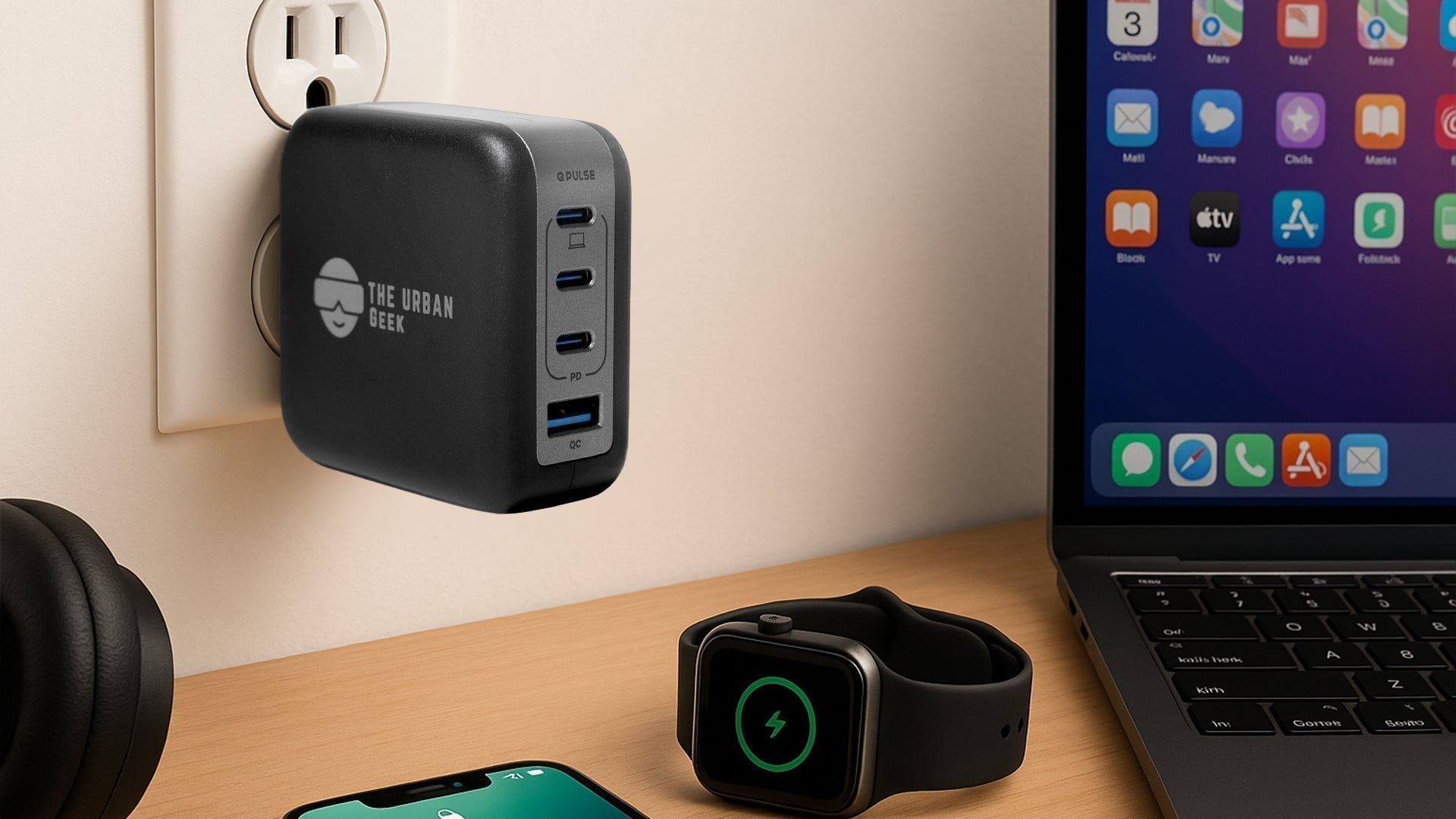

Phones, tablets, laptops, earbuds, and accessories all charge faster today — but only if your power adapter can keep up.
That is why more people are searching for “high-wattage power adapters.”
The problem? The term sounds technical, but the buying decision is not.
So what is a high-wattage power adapter, and how much power do you actually need for everyday charging?
Does higher wattage actually mean faster charging?
Is more power always better — or just more expensive?
And when do you need a 100W adapter versus a 240W-rated USB-C cable?
This guide breaks down what high wattage really means, when it matters, and how to choose the right adapter for your setup — without guessing, overbuying, or risking your devices.

High-Wattage Power Adapters Explained: Capacity vs Demand
What Is a High-Wattage Power Adapter?
Wattage is the total power capacity a power adapter can deliver — not what it forces into your device.
Modern USB-C power adapters use Power Delivery (PD), which means:
-
Devices request only the power they need
-
The adapter provides available capacity
-
Power adjusts dynamically as devices connect or disconnect
A high-wattage power adapter simply gives your setup more headroom, which becomes important as devices and charging demands increase.
When a Higher-Wattage Power Adapter Makes Sense
Higher-capacity adapters become valuable when multiple devices share power.
You benefit from a high-wattage power adapter if you:
-
Charge a laptop and phone at the same time
-
Work from a desk with multiple devices
-
Want consistent fast charging without power drops
In these scenarios, a 100W USB-C adapter provides the stability most modern setups need.
You can explore a high-capacity option in The Urban Geek’s fast USB-C power adapters designed for laptops and phones.

Where 240W Fits In — And Why Cables Matter
This is where many people get confused.
240W usually refers to the USB-C cable, not the power adapter.
High-performance laptops, external monitors, and docking setups can demand far more power than older devices. To support this safely, USB-C introduced Extended Power Range (EPR) — up to 240W.
Even the best power adapter cannot deliver higher power if the USB-C cable is not rated for it.
Think of it like plumbing:
-
The power adapter is the pump
-
The cable is the pipe
Both must support the same flow.
For demanding setups, using a 240W-rated USB-C charging and data cable helps prevent:
-
Power throttling
-
Excess heat
-
Unstable charging during heavy workloads
How to Choose the Right Power Adapter (No Math Required)
You do not need formulas to make a good first decision.
Use these real-world scenarios:
-
Phones, earbuds, and light daily charging — lower-capacity adapters work well
-
Tablets and shared household charging — higher capacity avoids slowdowns
-
Laptops and multi-device desks — a 100W adapter provides stability
-
High-performance or future-ready setups — pair a high-capacity adapter with a 240W-rated USB-C cable
For exact wattage numbers and calculations, see:
How to Calculate Charger Wattage (Without Guessing or Overbuying)
Are High-Wattage Power Adapters Safe?
Many people wonder whether higher wattage chargers are safe for phones and laptops.
Yes — when properly designed.
Modern USB-C adapters:
-
Do not force power into devices
-
Adjust output dynamically
-
Include thermal and electrical protections
In many cases, a higher-capacity adapter actually runs cooler and more efficiently than an underpowered one struggling to keep up.
Safety depends on adapter quality and cable certification, not wattage alone.
Frequently Asked Questions
Do I need a 100W power adapter?
If you charge a laptop or multiple devices at the same time, a 100W adapter provides enough capacity to prevent slow charging and power drops.
Is a higher-wattage charger better?
Not always. Higher wattage provides more capacity, but devices only draw what they need. The right choice depends on your setup.
Final Takeaway: Choose Capacity, Not Just Speed
High-wattage power adapters are not about chasing bigger numbers.
They are about having enough capacity when your devices need it most.
If you charge laptops or multiple devices, a 100W adapter provides the headroom that prevents slowdowns, heat, and inconsistent charging.
For high-performance or future-ready setups, pairing that adapter with a 240W-rated USB-C cable ensures stable power delivery without bottlenecks.
The right power setup simplifies your desk, protects your devices, and works reliably across home, work, and travel — without unnecessary clutter.
When your adapter has enough capacity, charging stops being something you think about. It just works.