
Few things improve a long-haul flight more dramatically than a good pair of noise-cancelling headphones. The constant low-frequency drone of airplane cabin noise is one of the most fatiguing sounds humans experience — and it is exactly what quality ANC is designed to handle.
Why Airplane Noise Is Different
Airplane cabin noise is dominated by low-frequency sound — typically in the 30 to 300Hz range. This includes engine and turbine hum, air conditioning airflow, and vibration transmitted through the fuselage. Cabin noise on a typical commercial flight measures 75 to 85dB — loud enough to cause measurable listening fatigue over several hours.
This low-frequency range is exactly where ANC performs best. ANC works most effectively on consistent, predictable sounds — and the steady drone of a jet engine is the ideal target. Sudden, unpredictable sounds (a baby crying, a sharp announcement) are harder for ANC to cancel, but the constant background drone that causes the most fatigue is cancelled almost completely by quality ANC.
Good ANC headphones on a long flight do not just make the flight quieter. They reduce auditory fatigue, which means you arrive feeling less exhausted than you would with standard headphones or no headphones at all. Many frequent flyers describe quality ANC as the single biggest improvement to their travel comfort.
What to Look for in Flight Headphones
- Strong ANC — minimum 30dB, ideally 38dB+: Hybrid ANC handles the full frequency range of cabin noise most effectively. The higher the dB attenuation, the more completely the engine drone disappears.
- Battery life that outlasts your flight: A 10-hour transatlantic flight requires at least 20 hours of battery life with ANC active to give comfortable margin, especially if you also use them in the airport and on connecting flights.
- Over-ear comfort for multi-hour wear: Memory foam ear cushions and balanced clamping force are worth seeking out for any flight over 3 hours. Discomfort that is minor in the first hour becomes significant by hour five.
- Foldable design: Headphones that fold flat or fold inward take significantly less space in your carry-on or personal item bag.
- Bluetooth 5.0 or newer: For stable wireless connection to your phone or tablet throughout the flight.
- Transparency mode: Lets you hear crew announcements and order from the cart without removing the headphones.
Why the Groove Pro Works for Air Travel
The Groove Pro wireless headphones check every one of these boxes:
- Hybrid ANC up to 38dB — upper tier of consumer noise cancellation, ideal for cabin drone
- Up to 30 hours battery life with ANC active — covers the longest commercial flights without recharging
- Over-ear cushioned design built for extended wear
- Foldable design for compact storage in carry-on luggage
- Bluetooth 5.3 for stable connection
- USB-C charging — the same cable as your phone and laptop, one less thing to pack
Travel Headphone Tips
Charge the night before, not at the airport. Airport charging stations are unreliable and often occupied. Leave home with full battery in your headphones — and a charged power bank as backup for connecting flights.
Bring a 3.5mm cable. Some in-flight entertainment systems require a wired connection to the seat-back screen. A 3.5mm cable lets you use your good headphones with the in-flight movies rather than the thin airline earbuds. Note that ANC works in wired mode too on most headphones.
Use ANC without music. Many frequent flyers wear ANC headphones on flights without playing anything — using noise cancellation purely to reduce cabin noise while they sleep, read, or work. ANC is a hardware function that works independently of audio playback.
Pack a magnetic power bank. For long travel days with multiple flights, a compact magnetic power bank keeps both your phone and headphones topped up between charging opportunities.
Shop PowerGo Magnetic Power Bank for travel →
Earbuds vs Headphones for Flying
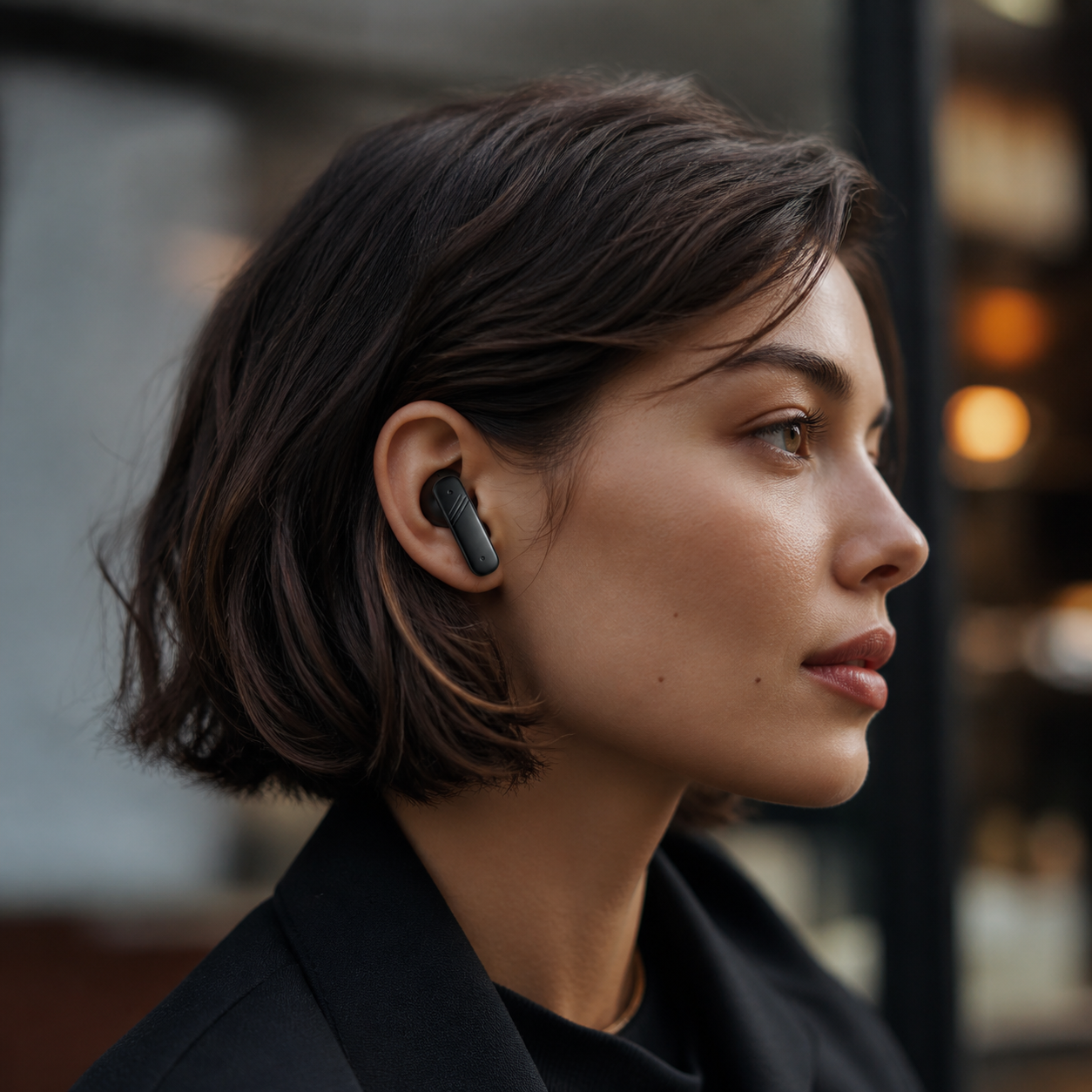
For flights under 3 hours, good earbuds with ANC are a viable and more packable option. The Groove Buds deliver ANC in a pocket-sized form factor that disappears into a bag.
For flights over 3 hours, over-ear headphones are almost always more comfortable. They provide better passive isolation (blocking sound physically in addition to ANC) and cause significantly less ear canal fatigue over extended wear. In-ear earbuds create pressure in the ear canal that becomes noticeable after a few hours; over-ear cups rest around the ear rather than inside it.
| Flight length | Best choice | Why |
|---|---|---|
| Under 3 hours | ANC earbuds | Packable, comfortable enough for short wear |
| 3–6 hours | Over-ear headphones | Better comfort and isolation |
| 6+ hours | Over-ear headphones | Minimal fatigue, longer battery, can sleep in them |
Shop Groove Buds for shorter trips →
Read More from The Geek Blog
- What is Hybrid ANC? →
- Best Wireless Headphones for Working From Home →
- Wireless Earbuds vs Headphones →
- TSA Power Bank Rules →
- Wireless Audio Guide →
Frequently Asked Questions
Are noise cancelling headphones worth it for flying?
Absolutely. Airplane cabin noise sits at 75 to 85dB of constant low-frequency drone — exactly what ANC is most effective at cancelling. Quality ANC headphones reduce this to near-silence and dramatically reduce the auditory fatigue that makes long flights exhausting.
How many hours of battery do I need for a long flight?
For a transatlantic flight of 8 to 10 hours, you want at least 20 hours of battery with ANC on for comfortable margin — accounting for airport use and connections. The Groove Pro delivers up to 30 hours with ANC active, covering the longest commercial flights without recharging.
Are earbuds or headphones better for flying?
For flights under 3 hours, earbuds with ANC are viable and more packable. For flights over 3 hours, over-ear headphones are almost always more comfortable — better passive isolation and significantly less ear canal fatigue over extended wear.
Can I use noise cancelling headphones during takeoff and landing?
Yes. Airlines no longer require removing headphones during takeoff and landing, though you should remain able to hear crew announcements. Using transparency mode during these phases lets you hear announcements while still wearing your headphones.
Do I need an airplane audio adapter for my headphones?
Some older in-flight entertainment systems use dual-prong 3.5mm connectors. For Bluetooth headphones, you would need a Bluetooth transmitter that plugs into the seat jack, or simply stream your own content from your phone via Bluetooth. A 3.5mm cable also lets you connect directly to single-jack systems.
Will my ANC headphones work in airplane mode?
Yes. ANC is a hardware feature that does not require any wireless connectivity. You can use ANC with Bluetooth turned off in airplane mode — the noise cancellation works independently of any wireless connection. You can also use ANC with a wired 3.5mm connection.
Does ANC help me sleep on flights?
Significantly. By removing the constant engine drone, ANC creates a much quieter environment conducive to rest. Many travelers wear ANC headphones with no audio playing purely to sleep more easily. Over-ear models are more comfortable for sleeping than in-ear designs.