
You have seen “Hybrid ANC” in headphone specs. You have probably also seen just “ANC” or “active noise cancellation”. They sound similar. The performance difference between them is significant — and understanding it helps you buy headphones that actually deliver the quiet you are paying for.
How Basic ANC Works
Standard (non-hybrid) ANC uses a single microphone, positioned either outside the ear cup (feedforward) or inside near your ear (feedback).
Feedforward ANC places the microphone on the outer surface. It samples incoming noise and generates an anti-noise signal before the sound reaches your ears. It is fast but cannot adapt to noise that has already entered the ear canal.
Feedback ANC places the microphone inside the ear cup, monitoring the sound near your ear. It is more precise and self-correcting but slightly slower to respond to sudden noise changes.
Both single-microphone approaches work, but each has blind spots. Feedforward misses sounds that enter from behind or below. Feedback cannot pre-emptively cancel sounds before they arrive. Both tend to underperform at higher frequencies — above 1kHz — where noise cancellation becomes technically harder.
How Hybrid ANC Solves Both Problems
Hybrid ANC combines both microphone positions simultaneously. One microphone sits on the outside of the ear cup. A second sits inside, near your ear. The system processes both inputs together:
- The outer microphone samples incoming noise and generates a pre-emptive anti-noise signal
- The inner microphone monitors what actually reaches your ear and fine-tunes the cancellation in real time
- The two signals work together, filling in each other's blind spots
The result is more complete noise cancellation across a wider frequency range — particularly better performance at mid and high frequencies where single-microphone ANC struggles.
The Performance Numbers
ANC effectiveness is measured in decibels (dB) of attenuation — how much the system reduces incoming noise levels.
| ANC Type | Typical attenuation | Best against |
|---|---|---|
| Basic feedforward | 15–22dB | Low-frequency drone |
| Basic feedback | 18–25dB | Mid-frequency noise |
| Hybrid ANC | 25–40dB | Full spectrum, low to high |
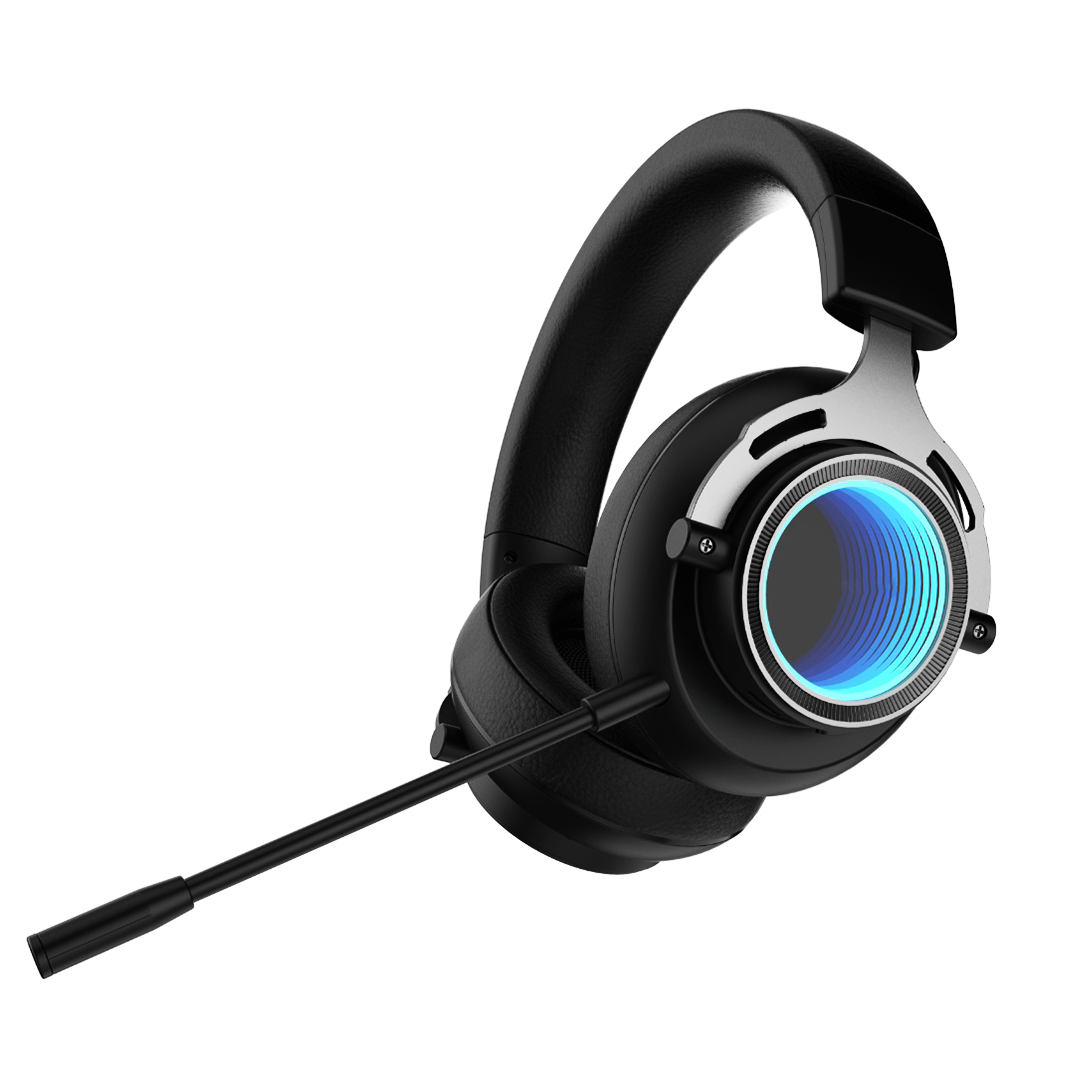
For reference: 20dB reduction makes a sound appear four times quieter to human perception. 40dB reduction makes it appear 100 times quieter. The Groove Pro delivers up to 38dB with Hybrid ANC — the difference between a busy open-plan office sounding like a quiet room.
Shop Groove Pro with 38dB Hybrid ANC →
Why Frequency Range Matters for ANC
Human-relevant noise covers a wide frequency range:
- Low frequencies (20–300Hz): Airplane engine hum, HVAC, traffic rumble, bus and train vibration. Basic ANC handles this reasonably well.
- Mid frequencies (300Hz–2kHz): Office chatter, keyboard sounds, television background. Basic ANC starts to struggle here.
- High frequencies (2kHz–8kHz): Sharp sounds, voices, alarms. This is where basic ANC underperforms significantly and Hybrid ANC provides a meaningful advantage.
If you primarily need to block airplane drone during travel, basic ANC may be adequate. If you need to block a full office environment — voices, keyboards, varying noise types — Hybrid ANC covers the full spectrum that matters.
Hybrid ANC and Battery Life
Running two microphones and the additional processing required for Hybrid ANC uses more power than basic single-mic ANC. This is why you will see a battery life difference between ANC-on and ANC-off modes in most Hybrid ANC headphones.
The Groove Pro delivers up to 30 hours battery life with ANC active — enough for several days of normal use between charges. The ANC penalty is real but manageable with a high-capacity battery design.
Hybrid ANC in Earbuds vs Headphones
Implementing Hybrid ANC in earbuds is significantly harder than in headphones due to physical space constraints. Placing two microphones in an earbud while maintaining sound quality and reasonable battery life is an engineering challenge that cheap earbuds solve by using only one microphone and calling it “ANC.”
The Groove Buds implement full Hybrid ANC in an earbud form factor — outer and inner microphones both active, delivering genuine wide-spectrum noise cancellation rather than the single-mic basic ANC found in many competitors at the same price point.
Shop Groove Buds with Hybrid ANC →
Adaptive ANC: The Next Step
Some premium headphones now include adaptive or dynamic ANC that automatically adjusts the level of noise cancellation based on the detected environment. In a quieter room, it reduces ANC to save battery. In a louder environment, it increases cancellation automatically.
Adaptive ANC is a refinement built on top of Hybrid ANC — not a separate technology. It uses the same dual-microphone system with additional algorithm logic to modulate intensity in real time.
Read More from The Geek Blog
- ANC vs ENC: What's the Difference? →
- Is ANC Bad for Your Ears? →
- Best Headphones for Flying →
- Wireless Audio Guide →
Frequently Asked Questions
What is the difference between Hybrid ANC and regular ANC?
Regular ANC uses a single microphone, either outside (feedforward) or inside (feedback) the ear cup. Hybrid ANC uses both simultaneously, with each filling the other's blind spots. The result is more complete noise cancellation across the full frequency spectrum — particularly better at mid and high frequencies where single-microphone ANC underperforms.
Is Hybrid ANC worth the extra cost?
Yes, for most daily use scenarios. If you only need to block low-frequency drone (airplane, train), basic ANC is adequate. If you need to block office chatter, mixed environment noise, or voices, Hybrid ANC provides meaningfully better performance. The Groove Pro delivers 38dB Hybrid ANC without premium brand pricing.
How many dB of ANC do I actually need?
For light office or quiet commute use, 20 to 25dB is generally sufficient. For noisy open-plan offices, airplane travel, or highly distracting environments, 30dB or above makes a significant practical difference. 38dB — the Groove Pro's rating — represents the upper tier of consumer ANC performance.
Does Hybrid ANC affect sound quality?
Well-implemented Hybrid ANC should have minimal impact on audio quality. The anti-noise signal is tuned to cancel ambient sound frequencies without coloring the audio you are listening to. Budget ANC implementations sometimes introduce a slight hiss or warmth coloring — premium Hybrid ANC designs avoid this.
Can Hybrid ANC block voices?
Better than basic ANC, yes. Human voice frequencies fall primarily in the 80Hz to 255Hz fundamental range with harmonics up to 3kHz — a range that Hybrid ANC covers more completely than single-microphone designs. It will reduce voice noise significantly though not eliminate it entirely, especially loud nearby voices.
Do earbuds have Hybrid ANC?
Some do, but it is genuinely harder to implement in the smaller form factor. Many earbuds marketed as having ANC use only a single microphone. Look specifically for “Hybrid ANC” or “dual-microphone ANC” in the specifications. The Groove Buds implement full dual-microphone Hybrid ANC in an earbud design.