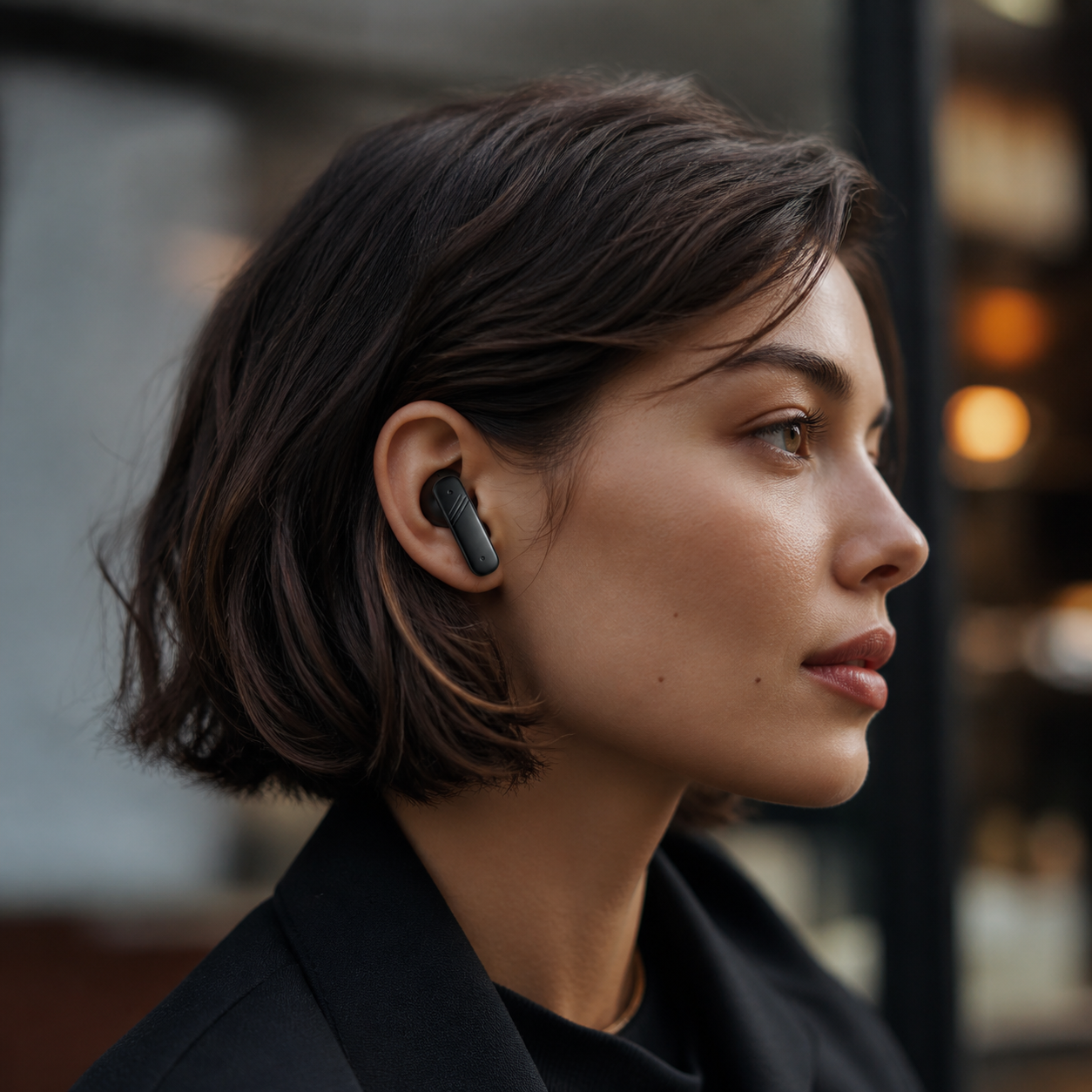

If you have ever worn ANC headphones and noticed a strange pressure sensation in your ears, you are not imagining it. And if you have wondered whether that sensation means ANC is damaging your hearing — you are not alone. The short answer: ANC is not harmful to your ears. But the full explanation is worth understanding, because it also reveals how ANC can actually protect your hearing.
Why ANC Feels Weird at First
The pressure sensation some people feel when activating ANC is not caused by sound pressure or volume. It is caused by sensory expectation.
When ANC activates and suddenly removes a significant portion of ambient sound, your brain interprets this change as a pressure shift — similar to the feeling when you ascend in an elevator or a plane. Your auditory system is accustomed to a constant baseline of background noise, and when that baseline drops abruptly, the brain's interpretation registers as a faint pressure or fullness in the ears.
Critically, there is no actual change in air pressure inside your ear. It is entirely a perceptual effect — your brain misinterpreting the sudden quiet. For most people, this sensation fades quickly with regular use as the brain adjusts to the experience of ANC-induced silence.
Does ANC Damage Your Hearing?
No. ANC does not emit any harmful frequencies, ultrasonic signals, or pressure that could damage the delicate structures of the inner ear.
The mechanism of ANC is purely subtractive. Microphones detect incoming sound waves, and the headphones generate an inverted “anti-noise” signal that cancels those waves before they reach your eardrum. The anti-noise is precisely matched in amplitude and opposite in phase to the incoming noise, so the two waves cancel out. ANC is removing sound energy, not adding harmful energy.
There is no documented mechanism by which this process could damage hearing. The anti-noise signal operates at low levels matched to ambient noise — it is not a loud sound being pumped into your ear.
The Real Hearing Risk: Volume, Not ANC
The biggest hearing risk in headphone use is simple and well-documented: listening too loud for too long.
Research consistently shows that sound exposure above 85dB for extended periods causes cumulative, permanent hearing damage. The louder the sound, the less time it takes to cause harm. At 85dB, damage accumulates over hours. At 100dB, it can occur in minutes.
| Volume level | Example | Safe exposure time |
|---|---|---|
| 85dB | Heavy traffic | ~8 hours |
| 95dB | Loud headphone use | ~47 minutes |
| 105dB | Very loud music | ~5 minutes |
| 115dB | Maximum on many devices | ~30 seconds |
Here is where ANC becomes genuinely beneficial. In a noisy environment — a train, a plane, a busy street — people unconsciously raise their volume to 90dB or above to hear their audio over the background noise. This is one of the most common causes of noise-induced hearing damage in headphone users.
ANC removes the background noise, which removes the pressure to raise the volume. When your environment sounds quiet, you can listen at a comfortable 60 to 70dB and still hear every detail clearly. In this way, ANC indirectly protects your hearing by enabling lower-volume listening.
Shop Groove Pro with Hybrid ANC →
Who Should Be Cautious with ANC?
ANC is safe for the vast majority of people, but a few groups may want to ease into it:
Vestibular sensitivity: Some people with inner ear conditions affecting balance find the pressure sensation more pronounced or mildly disorienting. If you are prone to vertigo or motion sensitivity, try ANC for short periods first before extended use, and start with lower ANC intensity if your headphones offer adjustable levels.
Anxiety around sensory change: The sudden silence can feel unsettling to some people. Starting with lower ANC settings and building up over several sessions helps the brain adjust gradually.
Situational awareness needs: ANC is not harmful, but it does reduce your awareness of your surroundings. Do not use strong ANC while walking near traffic, cycling, or in any situation where hearing your environment is a safety necessity. Use transparency mode instead in those contexts.
Children: No specific harm from ANC has been documented for children. However, age-appropriate headphones with volume-limiting features (typically capped at 85dB) are the most important consideration for protecting young ears — far more important than whether ANC is present.
Does ANC Affect Sound Quality?
Well-implemented Hybrid ANC maintains natural sound quality with no audible compromise. The anti-noise signal is tuned to cancel ambient frequencies without coloring the music you are listening to. Budget ANC implementations can sometimes introduce a faint background hiss or subtle audio coloring due to less sophisticated processing. Premium ANC headphones like the Groove Pro with Hybrid ANC are specifically designed to preserve audio fidelity while cancelling noise.
The Bottom Line
ANC is safe. The pressure sensation is a normal perceptual effect, not a sign of harm. There is no medical basis for limiting daily ANC use. And the real risk in headphone use — excessive volume — is actually reduced by ANC, because a quieter environment lets you listen at safer, lower volumes. Used sensibly, ANC is a net positive for hearing health.
Shop ANC headphones and earbuds →
Read More from The Geek Blog
Frequently Asked Questions
Why do I feel pressure in my ears when I turn on ANC?
The pressure sensation is a perceptual effect, not physical pressure. When ANC removes ambient sound suddenly, your brain interprets the change similarly to an altitude change. There is no actual change in air pressure inside your ear. Most people stop noticing this within a few uses as the brain adjusts.
Can ANC cause hearing damage?
No. ANC creates an anti-noise signal that cancels incoming sound waves — it removes sound rather than adding it. There are no harmful frequencies, ultrasonic signals, or elevated pressure levels involved. There is no documented mechanism by which ANC could damage hearing.
Is it okay to use ANC headphones every day?
Yes. There is no medical basis for limiting daily ANC use. ANC actually promotes better hearing health indirectly by reducing the temptation to raise volume to compete with background noise — a primary cause of noise-induced hearing damage.
Why do some people feel dizzy wearing ANC headphones?
A small number of people with vestibular (inner ear balance) sensitivities find the sensory shift of ANC mildly disorienting. Starting with lower ANC settings and gradually increasing exposure over several sessions usually resolves this. If dizziness persists, discontinue use and consult a doctor.
Does ANC affect sound quality?
Well-implemented Hybrid ANC maintains natural sound quality. Budget ANC can introduce slight hiss or audio coloring due to less sophisticated processing. Premium ANC headphones like the Groove Pro with Hybrid ANC are designed to preserve audio fidelity while cancelling noise.
Should children use ANC headphones?
No specific harm from ANC has been documented for children. However, children's headphones should always include volume-limiting features — a volume cap at 85dB maximum is the single most important hearing protection for children, far more so than whether ANC is present.
Does ANC protect my hearing?
Indirectly, yes. By removing background noise, ANC lets you listen at lower volumes (60 to 70dB) while still hearing clearly. This reduces the cumulative volume exposure that causes noise-induced hearing loss. The protection comes from enabling lower-volume listening, not from the ANC process itself.