
Home blood pressure monitoring has become an important tool for managing hypertension, assessing treatment effectiveness, and detecting patterns that single clinical readings cannot capture. The key is understanding that accuracy depends more on technique than on device selection.
Why Home Blood Pressure Monitoring Matters
A single reading at a doctor's office captures one moment in time. Blood pressure naturally varies throughout the day — it is lowest during sleep, rises sharply on waking, peaks in the mid-morning, dips in the afternoon, and rises again in the early evening. Exercise, meals, caffeine, stress, and temperature all cause fluctuations.
Home monitoring captures this variation and provides your doctor with data that a clinic visit cannot: your typical readings across different times of day, your response to lifestyle changes, and whether your medication is working throughout the day or wearing off by evening.
Equipment Setup: What You Need Before Starting
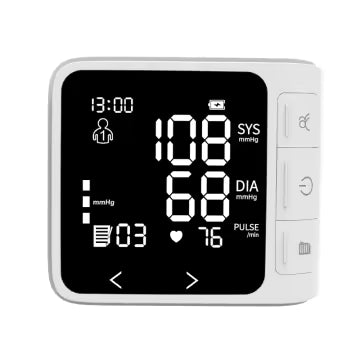
The EasyPulse wrist blood pressure monitor requires only the monitor on your wrist and a flat surface at the right height. Before your first use:
- Read the quick-start guide to understand the positioning indicator feature
- Identify a table or desk where you can sit with your arm at chest level
- Set the time and date if your monitor stores readings with timestamps
- Note your baseline: some people start several degrees above “normal” — your doctor needs to know your typical range, not just whether individual readings seem high or low
Shop EasyPulse Wrist Blood Pressure Monitor →
Pre-Measurement Preparation (Critical)
Blood pressure measurement accuracy is dramatically affected by what you do in the 30 minutes before measuring. A rushed, post-exercise reading taken immediately after coffee will read 15 to 25 mmHg higher than a properly prepared resting reading for the same person.
30 minutes before measurement:
- No caffeine (coffee, tea, energy drinks, some sodas)
- No vigorous exercise
- No smoking or nicotine
- Empty your bladder if needed — a full bladder can elevate readings by 10+ mmHg
5 minutes before measurement:
- Sit quietly in your measurement position
- No talking, no phone use, no stressful thoughts if possible
- Normal breathing — do not hold your breath
Sitting Position: Every Detail Matters
Your body position during measurement directly affects the result. Each of these factors has documented effects on systolic blood pressure:
| Position Error | Effect on Systolic BP |
|---|---|
| Wrist below heart level | +5 to +15 mmHg |
| Wrist above heart level | -5 to -10 mmHg |
| Crossed legs | +2 to +8 mmHg |
| Back unsupported | +6 to +10 mmHg |
| Arm unsupported (dangling) | +7 to +11 mmHg |
| Talking during measurement | +7 to +11 mmHg |
Correct position:
- Sit in a chair with full back support — both upper and lower back touching the chair back
- Both feet flat on the floor — no crossing
- Rest your forearm on the table surface at chest height — the wrist should be at heart level (mid-sternum height)
- Stay completely still and silent during the measurement
The Wrist Position Critical Point
For wrist blood pressure monitors specifically: the most common source of inaccuracy is wrist height. The wrist must be at heart level — approximately at the height of the mid-chest. This is not intuitive.
To achieve correct wrist height sitting at a table: the table must be at approximately elbow height. Most dining tables are at the correct height. Many desks are slightly too high (designed for keyboard use, not arm resting).
The EasyPulse’s positioning indicator confirms your wrist is at the correct height before the measurement begins. If the indicator alerts you, adjust — do not measure in the incorrect position and hope for the best.
Taking the Measurement and Recording Results
Once correctly positioned:
- Place the monitor on your left wrist (unless instructed otherwise), one finger-width below the wrist bone, with the display facing upward
- Ensure the cuff fits snugly but not painfully — you should be able to slip one finger underneath
- Check the positioning indicator on the EasyPulse confirms correct wrist height
- Press the start button and remain completely still and silent
- Record both the systolic (top) and diastolic (bottom) numbers plus pulse rate
- Wait one minute and repeat — take two to three readings and average them
Interpreting Your Readings Over Time
Single readings are less meaningful than patterns. A reading of 145/92 on one Tuesday morning is less informative than a week of morning readings averaging 138/85. Track your readings in a log (date, time, both numbers, and any notes about relevant factors) and share the log with your doctor at appointments.
Blood pressure naturally varies by 10 to 20 mmHg throughout the day for most people. This is normal. Concerning patterns include: readings that are consistently above 140/90, readings that do not respond to medication as expected, or readings that spike dramatically in certain situations.
Read More from The Geek Blog
Frequently Asked Questions
Why do I get different readings every time I check my blood pressure?
Blood pressure is not a fixed number — it varies continuously based on activity, stress, posture, breathing, and time of day. Differences of 5 to 15 mmHg between readings minutes apart are normal. The goal is to track trends from consistent morning and evening measurements using correct technique, not to react to individual readings.
How often should I monitor my blood pressure at home?
For initial monitoring after a new diagnosis or medication change: twice daily (morning and evening) for 1 to 2 weeks. For ongoing maintenance monitoring: once or twice daily or as your doctor recommends. More frequent monitoring without medical guidance rarely provides additional clinical value and can cause unnecessary anxiety.
My doctor’s readings are always higher than my home readings. Should I worry?
This is extremely common and has a name: white coat hypertension. The stress of a clinical environment genuinely elevates blood pressure. Your doctor is aware of this phenomenon. Home readings are often more representative of your typical pressure. Bring your home monitor to an appointment for a side-by-side comparison to help your doctor calibrate the difference for your specific case.
Can I measure blood pressure on my right wrist instead of my left?
Yes. Most guidelines recommend the left wrist by convention (closer to heart level on most people), but the right wrist is acceptable. More importantly: be consistent. Always use the same wrist for all your home readings so that your tracked data is comparable over time.
What should I do if I get a very high reading?
A single reading of 180/120 or higher (hypertensive crisis level) warrants checking again in 5 minutes after resting. If both readings are at this level, contact your doctor or seek medical attention. A single isolated high reading is often due to recent exertion, stress, or technique error rather than a true hypertensive crisis — but at those levels it is worth confirming.